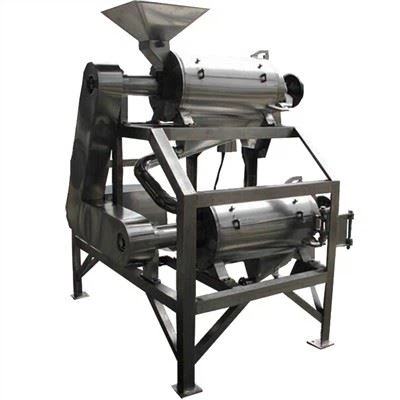
Production Introduction
This Fruit Vegetable Hole Punching Machine is for pricking holes on the vegetables, such as peppers.
The needle diameter and quantity can be customized according to the customer's requirement.
It's a dedicated vegetable pricker or needling machine. You feed whole vegetables – think bell peppers, jalapeños, eggplants, cucumbers, or any similar produce – into the machine. It passes them under a plate or roller fitted with rows of fine needles.
The needles pierce the skin cleanly, then retract. The vegetable comes out looking almost untouched, but now its surface is covered with hundreds of tiny holes. Those holes are channels for salt, vinegar, oil, spices, or stuffing to get inside.
For a pickling operation, this cuts soaking time from days to hours. For stuffed peppers, it prevents the filling from pushing out as the skin contracts during cooking.

Production Parameter
|
Model |
Capacity |
Power |
Dimension |
Weight |
|
TPP-660 The conveying width is 20cm
|
100-400kg/hr |
1.1kw |
900*460*1060mm
|
120kg |
|
TPP-1000 The conveying width is 30cm |
200-600kg/hr |
2.2kw |
1300*610*1060mm |
170kg |
|
TPP-2000 The conveying width is 50cm |
1000kg/hr |
2.2KW |
1300*850*1060mm |
200kg |
Advantage

The spec sheet says the needle diameter and quantity can be customized to your requirements. That's not a minor detail.
Different vegetables need different needles. A thick-skinned bell pepper needs a sturdier, slightly larger diameter needle than a thin-skinned cherry pepper. And the number of needles per square inch determines how dense the punctures are.
For a quick pickle where you want rapid absorption, you'd want more needles.
For a product that needs to stay firm and crisp, fewer needles spaced farther apart is better.
You also need to consider the vegetable size. A small hot pepper needs a narrower needle arrangement than a large eggplant.
When you order the machine, you work with the supplier to dial in the needle configuration for your specific application. Don't just take a standard setup – think about your vegetable, your brine, and your desired texture.
The outer shell is made of 201 stainless steel. This is food-grade stainless – it resists corrosion, it's easy to clean, and it won't rust under normal use.
It's not the premium 304 grade, but for a machine that isn't constantly exposed to highly acidic or salty conditions, 201 is perfectly adequate. It keeps the cost down while still being hygienic. T
he frame, however, is cast iron. That's a smart design choice. Cast iron is heavy and rigid.
When you have a needle mechanism cycling up and down rapidly – think of a sewing machine but much larger – you want the frame to be solid so the needles hit consistently every time.
The 120kg total weight tells you there's real iron in there. This machine isn't going to shake, vibrate, or walk across the floor during operation.

Who should buy this machine?
This is for anyone processing whole vegetables that need to absorb liquid. Specific examples:
Pickle makers producing whole pickled peppers (jalapeños, banana peppers, cherry peppers)
Olive producers who brine or marinate whole olives
Manufacturers of stuffed peppers or stuffed eggplants (the holes help the filling stay in place)
Any operation making marinated vegetables in oil, vinegar, or brine
Hot sauce producers who want to infuse peppers with flavor before processing
Summary
The Fruit Vegetable Hole Punching Machine is straightforward, durable, and built for a specific job.
It takes a tedious manual task – pricking holes in thousands of vegetables – and turns it into a continuous, automated process.
The adjustable needle configuration means you can set it up exactly for your vegetable and your application.
If you're in the pickling or marinating business and you're still using hand tools, this machine is worth a serious look.
Hot Tags: fruit vegetable hole punching machine, China, suppliers, manufacturers, factory, customized, wholesale, buy, price, quotation, cost, for sale